Line Stopping

The line stopping process can be made to any main pipe material using the most compatible fittings and components found on the market. To us, it does not matter if it is a small leak repair or a large-scale pipeline relocation we will ensure a flexible and customer-oriented service.

Process

Line stopping (also known as line plugging) is a safe and efficient solution for temporarily isolating a section of a piping system without shutting down the entire network. This allows all modifications and repairs to be carried out in the isolated section while the rest of the pipeline remains fully operational. Line stopping acts as a temporary shut-off valve when no existing valves are nearby or when existing valves are not functional.

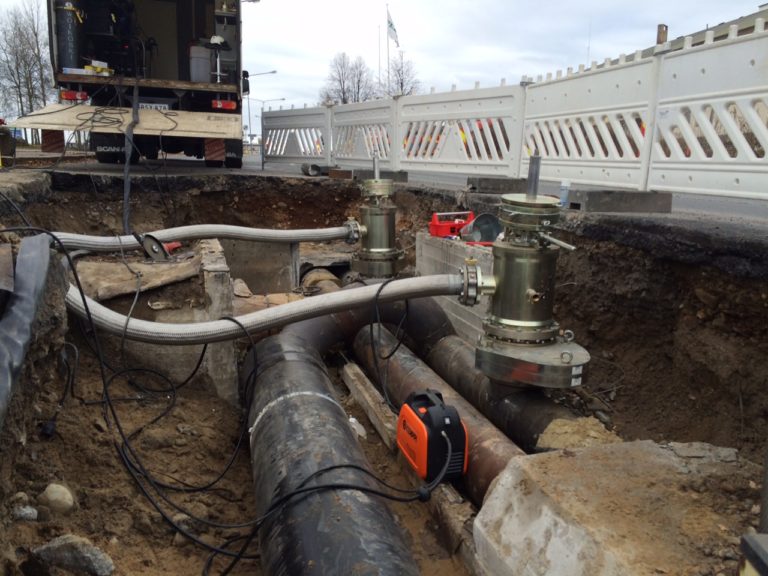
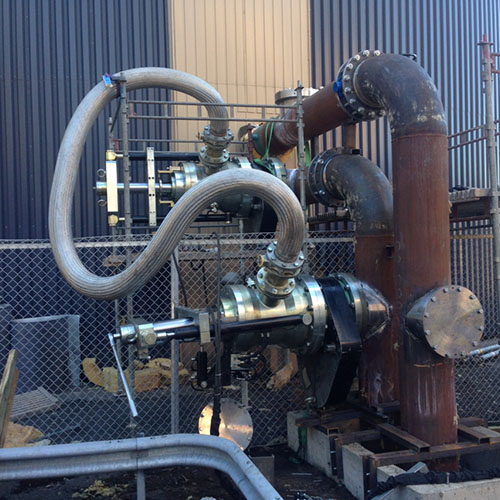
The process begins by installing line stop fittings on the pipeline — either by welding or, if welding is not possible or permitted, by using a mechanical clamp fitting. Once the fitting is secured, Tonisco Service inserts a temporary line stop valve and performs a hot tap to access the main pipe. After the hot tapping is complete, a mechanical plugging head is inserted into the pipeline. The stopper head is then tightened to safely restrict flow in the targeted section.

Tonisco Service primarily uses high-tolerance mechanical plugs, which provide a reliable and flexible solution for both new and aging pipelines, regardless of their current condition.

Method

For district heating and cooling networks, there are two primary line stopping methods: Single Stop and Double Stop solutions.

In the Single Stop method, the pipeline is temporarily plugged from one point. Once the plugging is completed, the line is safely drained, and repair or modification work is carried out on the emptied and secured section. In this setup, the line stop functions as a temporary shut-off valve.

The Double Stop method involves plugging the line from two points. The section between these two plugs is then drained, while the rest of the network remains fully operational. A temporary bypass line is installed between the line stop machines to maintain continuous service during the work.

Common Applications for Line Stopping

  • Leak repairs with minimal or no service interruptions

  • Valve replacements or new valve insertions under pressure

  • Pipeline relocations without service loss or shutdowns

  • Adding new pipeline components or structures to existing systems

If you want to learn more about how to perform repair and modification work without shutting down your network, please contact our service team at service@tonisco.com.

Key Features

Key Features of Tonisco Line Stopping Service

  • No service interruptions — the pipeline remains fully operational

  • No treated water loss during the process

  • No need to wait for the line to be completely emptied, significantly reducing filling times

  • Avoids costly pipeline redesigns and lowers planning expenses

  • Eliminates the need to notify customers of heating or cooling shortages

  • Facilitates cooperation through shared work stages, including welding

  • Turnkey planning and execution available upon request

Operational Parameters — Basic Service Package

  • Maximum operational pressure: 25 bar at 40°C

  • Maximum operational temperature: 130°C at 16 bar

  • Line stop size range: DN20 (3/4″) to DN1600 (64″)

  • Compliant with both ASME and DIN standards

Operational Parameters — Special Service Package

  • Maximum operational pressure: 700 PSI at 40ºC

  • Maximum operational temperature: 270ºC at 350 PSI

  • Line stop size range: DN25 (1″) to DN1600 (64″)

  • Compliant with both ASME and DIN standards